Series
Five Holes

Curatorial Statement by Paul Couillard

Five Holes foregrounds our bodies by examining aspects of the five basic human senses. The presence of bodies—the performer’s body and the audience members’ bodies—is an essential element of performance. We ‘perform’ when we bring our bodies into relationships with an audience in time and space. Five Holes considers some of the ways in which sight, touch, smell, hearing and taste allow us to perceive. At the core of this project is a concern with our bodies as a root aspect of humanness. The presence of bodies—the performer’s body and the audience members’ bodies—is an essential element of performance. We ‘perform’ when we bring our bodies into relationships with an audience in time and space. Five Holes foregrounds our bodies, considering some of the ways in which sight, touch, smell, hearing and taste allow us to perceive.

Civilization has constructed a worldview where ‘virtual’ reality has become a tantalizing ideal—a desired end point that will offer our consciousness and imagination a new beginning and a new territory to explore. At the same time, cultural theory has come to consider our bodies as something separate from our selves—referring to an objectified Other, ‘the body’, sometimes understood as a ‘text’, and sometimes considered as one ‘site’ among many to be inhabited. Our bodies are now subject to interrogation on multiple fronts, particularly in the realm of performance—from Stelarc’s assertions that “the body is obsolete” to Orlan’s surgical remodeling of her physical appearance. It seems that we are following an inevitable path, guided by René Descartes’ oft-quoted maxim, “I think, therefore I am.” We are in a headlong rush to abandon our bodies—our imperfect, traitorous physical forms that suffer, wear out and eventually die. We seek immortality and omnipotence, two qualities that our ‘minds’ can imagine but that our ‘bodies’ can never attain.

But where and how are knowledge and imagination generated? For me, the answer lies in the daily struggles and resistances that my body undergoes. I am motivated by imperatives—survival, empathy, a search for fulfillment—that are bodily driven. Learning does not come from having my thoughts fully realized the moment that I think them; learning comes from experience, which is another way of saying that it develops through the process of making my thoughts manifest in physical form. Learning happens as I go about trying to reconcile my theoretical ideal with the exigencies of physical laws and available resources. To ‘do’ inevitably brings a deeper, more nuanced understanding than to ‘imagine’. This is not a simple or straightforward process: it brings pain as well as pleasure, and often what I discover seems neither fair nor friendly. Nevertheless, I am not so eager to leave behind my cross-eyed, bow-legged body. I love this life, and I am certain that what I have to learn or discover can only be manifested through my body.

We define our living bodies in multiple ways: as material (flesh, blood and bone); as process (respiration, circulation, electrical impulses); and as vessel (of experience and consciousness). It could be argued that our senses are what constitute our bodies. We associate our senses most directly with ‘sensation’, the domains of pleasure and horror, but our senses also play a larger role in connecting us to the world and shaping our identities. They are how we apprehend the world—the points of intersection between our individual consciousnesses and the actuality of time and space. It is through our senses that we undertake and negotiate our relationships to each other and our surroundings. Human senses have developed over time. Each sense provides us with a different set of information, evolving, if we believe Darwin, according to what best allows us to survive and prosper as a species. As conditions change, and as our bodies adapt in other ways, presumably our senses could also change. Five Holes provides artists and audiences with an opportunity to test their senses as they are now, informed by both history and imagination.

Five Holes brings us together in this time and this space to see, touch, smell, hear and taste. These varied projects are united in their search for the possibilities—not only for pleasure, but also for knowing—that the senses have to offer.

Five Holes was a multi-year, multi-event series curated by Paul Couillard. Spanning the years 1995–2006, each iterative event highlighted one of the body’s five senses.

Five Holes: I’ll be seeing you (1995)
Five Holes: Touched (1997)
Five Holes: reminiSCENT (2003)
Five Holes: Listen! (2004)
Five Holes: Matters of Taste (2006)

Performance
Five Holes: I’ll be seeing you

A Space Gallery, 3fl–183 Bathurst Street, Toronto

ARTISTS
Paul Couillard
Fiona Griffiths
Ed Johnson
Bernice Kaye
Sandy McFadden

Shake off the New Year’s blahs by taking in a performance art peep show. FADO combines installation and performance art in Five Holes: I’ll be seeing you, featuring new works created by members of the FADO collective. Isolated in individual cubicles, the performers will each create their own six-hour performance work that can only be seen through tiny peepholes. Twenty-five cents buys viewers a one-minute look, or for $5 you can be an audience for the full six hours.

What’s behind that curtain? There’s only one way to find out.

Artist
Simla Civelek

Turkey / Canada

www.simlacivelek.com

Simla Civelek is a performance artist based in Toronto, Canada. Her work has been presented at FADO Performance Art Centre, 7a*11d International Festival of Performance Art, SAVAC, and Nuit Blanche in Toronto; Thompson Rivers University in Kamloops; Circa in Montréal; Art Nomade in Chicoutimi; Regart in Lévis; Glasshouse Art Life Lab in Brooklyn and Experimental Action Performance Art Festival in Houston, USA; and OPEN Performance Art Festival in China, among other venues.

“I don’t want realism, I want magic.”

I came across this quote recently, once again, years after reading A Streetcar Named Desire for the first time. Things feel inherently different now. An outside world in turmoil and an inner world with angst, fear, and weariness. Blanche makes more sense, or rather, I understand her need. When I have the cynical question of “why make performance,” I also have the inclination to start from the present moment to find an answer, or rather, to look for an answer. As realism can never be a match for magic. ~Simla Civelek

Performance
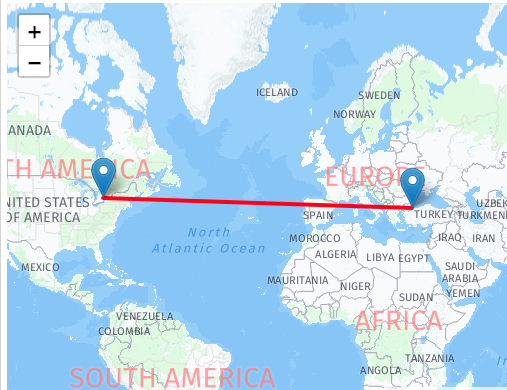
Performance Home: from Toronto to Turkey by Simla Civelek

In a sense, the idea for my residency formed in the summer of 2019 in Turkey before the pandemic and before I even knew about the possibility of a residency. While I visited my home city of Istanbul after a 13-year hiatus, I unknowingly germinated the urge to move back there for a year.

Of course, the Covid-19 pandemic put a hold on my half-realized plans. My urge, fortified by powerlessness, transformed into a craving, an itch, a determination to explore the hunger I felt for Turkey.

This year, 2021, started with a concept of making a video in my childhood home in Istanbul. The apartment is uninhabited, complete with old furniture from 80s and 90s, covered with dusty white sheets, with shutdown old windows and blinds, dull musty air and perhaps old spirits. A time capsule from the last lived day of 1994 before our Canadian emigration.

What would be like to go back and record a walk-through of this space, like an audience-less performance, like a home movie of a ghost of a home? The camera as all-seeing eye, from my apartment in Toronto to our apartment in Istanbul, through a distance of 8,196.58 kms?

While I am creating this video in my mind (for now,) walking through the space in my memory, I am also creating actual videos for my day job of auditioning for commercials, film, and TV. Countless of takes for a 30-second footage of pretending to eat a salad or some chips while scolding my imaginary children, acting like a senator or a Middle Eastern engineer, suggesting organic rice to my neighbour, gardening with a surprised look on my face, reading a bowl of cereal like a crystal ball, drinking from a river, thanking the public for being vaccinated and waking up happy in bed…

So now I’m thinking about the absurdity of the correlation of these two notions in video. The manufactured actions of commercial acting and the archival footage of home, stacked together like a building.

There is a video somewhere.

Like the end of Covid, it is unhurried, throbbing, reluctant and eager.

Performance
Performance Home: to embrace the sky by Irene Loughlin

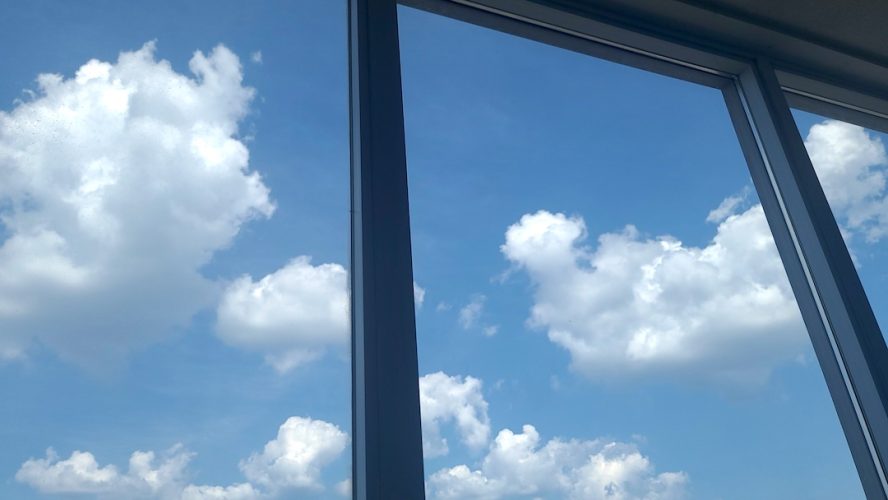
Irene Loughlin’s home—where she spent the 2nd Covid-19 lockdown of 2020, and continues to live—is a small one bedroom apartment she shares with one other person. This 20th floor remnant of rent control is a tall building on the Hamilton escarpment, a concrete monument to the 70’s. Loughlin’s apartment contains an enclosed glass balcony that she has converted into her studio. From there, during the first part of her Performance Home residency, Loughlin is working on a series of experimental video performances using her body to reach and sustain contact with the “outside,” extending her arms through windows to establish a personal choreography with the sky and clouds, changing weather and birds; and through various actions such as ‘embracing the building’ in gratitude for shelter.


Alongside this corporeal research practice, Loughlin is mining her performance documentation archive. Observations written during her entry level job in the film industry in the midst of the pandemic are included. Her writing and drawings contain references to the first lockdown when she lived alone, and the film industry shut down. She spent most of the first three months of lockdown on CERB (as did many privileged persons living in Canada), deriving mental and spiritual sustenance from walking in the forest. By walking outside—breaching government recommendations in the first weeks and months of the pandemic—she sought to preserve her ‘sanity’ as a neuroatypical person living through the first pandemic announcements. These walks were generally devoid of human presence, and she took solace in the company of emerging deer, hawks, and other animals, as well as plants, trees and waterfalls. The first lockdown in the forest mirrored her experiences as a child confused in the company of others and seeking relief in the natural world. Sources are translated into pen and ink drawings, juxtaposed with writing that comments on her experiences as a performance and visual artist. The work comes together in a newly self-designed literary hybrid—a performance art graphic novel—that combines past objectives with the emotive and ecological crisis of our current moment specifically from Loughlin’s neuroatypical perspective.

Series
Performance Home

FADO’s on-going residency series, begun in 2020 in response to the global Covid-19 pandemic.

Participating artists in 2020–2022
Simla Civelek
Louise Liliefeldt
Irene Loughlin

Artist
Jess Dobkin

USA / Canada

www.jessdobkin.com

Jess Dobkin is an artist, curator and teacher whose prolific practice extends across black boxes and white cubes, art fairs and subway stations, international festival and single bathroom stalls. She creates intimate solo theatre performances, large-scale public happenings, playful subversive interventions and engaging performance art workshops and lectures.

Her creative endeavours have received wide support and recognition, including repeated funding from the Franklin Furnace Fund for Performance Art and the Astraea Foundation, and awards from the Canada Council for the Arts, the Ontario Arts Council, and the Toronto Arts Council. Her work has toured North America, and has been presented at renowned avant-garde venues in New York, including P.S.122, The Kitchen, LaMama, Dixon Place, Judson Memorial Church, and the WOW Cafe. In Toronto, her work has been presented at the Rhubarb! Festival, SPIN Gallery, the Inside/Out Festival, the Hysteria Festival, and other venues.

Artist
W. A. Davison

b.1962, Canada

www.recordism.com

William A. Davison is a Canadian multi-disciplinary artist born in Nova Scotia, and based in Toronto since 1989. He has been producing art for almost 40 years, working in visual art, film and video, performance art, music/sound, writing/poetry, networking, artistic collaboration, organizing/curating, and publishing. As a reaction to the cultural isolation and conservatism he experienced growing up in Nova Scotia, Davison sought out anything strange, nonconforming and subversive. His art and ideas developed under the influence of science fiction, the occult, underground and avant-garde comics, psychedelia, Dada and Surrealism, punk, post-punk, and industrial music culture.

In 1984 he founded Recordism, his own idiosyncratic take on Surrealism. His prolific and eclectic artistic output derives from an uncompromising experimental approach and a commitment to the punk D.I.Y. ethos. Davison’s dedication to enlivening his local scene has gone hand in hand with an international reach via appearances at major festivals, exhibitions, and events, as well as through numerous publications and audio releases. W.A.Davison was a recipient of an Acker Award in 2018.

Artist
Claudia Edwards

Canada

https://claudiaedwards.info/

Claudia Edwards is a performance and visual artist based in Toronto, Canada. Of Indo-Guyanese and British descent, their work explores issues of identity, memory, queerness, power, and decolonization. Their approach is conceptually driven and formally determined by operation and circulation, spanning the forms of socially-engaged performance art, persona, somatic dance, photography, video, text and objects. Edwards has created performances for Pi*llOry, The School of Making Thinking, Flux Factory, Virtual International Exchange, and more. Their curatorial work includes HOTWIRE, a live art series featuring QTBIPOC artists hosted in residency at Hub14, and serving on the Rhubarb 2020 curatorial collective. They obtained their BFA at Concordia University in 2016.

Artist
Vanessa Dion Fletcher

Canada

www.dionfletcher.com

Vanessa Dion Fletcher is a Lenape and Potawatomi neurodiverse Artist. Her family is from Eelūnaapèewii Lahkèewiitt (displaced from Lenapehoking) and European settlers. She employs porcupine quills, Wampum belts, and menstrual blood, to reveal the complexities of what defines a body physically and culturally. Reflecting on an Indigenous and gendered body with a neurodiverse mind, Dion Fletcher creates art using composite media, primarily working in performance, textiles and video. She graduated from The School of the Art Institute of Chicago in 2016 with an MFA in performance at York University in 2009 with a Bachelor of Fine Arts. She has exhibited across Canada and the USA, at Art Mur Montréal, Eastern Edge Gallery Newfoundland, The Queer Arts Festival Vancouver and the Satellite Art show in Miami. Her work is in the Indigenous Art Centre, Joan Flasch Artist Book collection, Vtape, Seneca College, and the Archives of American Art. 

Artist
Roy Mitchell

Photo courtesy of the artist, 2020

Canada

Roy Mitchell’s artistic practice encompasses media arts, performance, community organizing, curation, podcasting, writing and more. He holds an Honours Degree in Social/Cultural Anthropology from the University of Toronto (1986). Between 1996 and into the 2000s, Mitchell created over 16 short videos and films. These mostly personal, documentary pieces have been screened locally, nationally and internationally at film festivals, galleries and artist-run events. His art writing has appeared in various magazines and publications including (Xtra, rabble.ca) and he was the Executive Director of Trinity Square Video in Toronto from 2001-2013. 

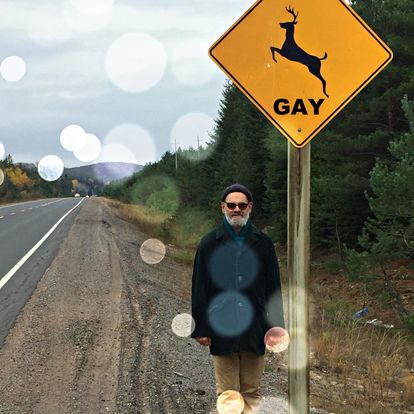
Before moving to the small hamlet of Hybla near Bancroft, Ontario in 2013, Mitchell created several interventions in public space inspired by Toronto Mayor Rob Ford and other local politicians. Drawing The Line was a performance-intervention that started with a free-to-all figuring drawing class in the square outside of Toronto City Hall. After some instruction, the participants moved en masse into the council chambers where participants sketched the councillors during a public meeting. The drawings that were created were later exhibited at Toronto Free Gallery. Many of the participants in Drawing the Line had never been to city hall or a council meeting before, and some had never been inside a gallery. Drawing The Line was a remarkable convergence of art and politics that insprised much of Mitchell’s current artistic interests. Mitchell later created the Embarrassing Mayor Tour Public Art Tour where he lead people on tours of city hall to talk about the public art there and weave in embarrassing stories about Toronto’s most embarrassing mayor, Rob Ford.

Mitchell’s work continues to be deeply informed by his politics, and tends to focus on community politics at a municipal level. He approaches all of his work an earnest criticality and a large dose of humour. He uses social media as a platform to create wry commentary on local activities, playing around the edges of journalism, performance, persona and parody. His first podcast, Roy Nation, focussed on Mayor Rob Ford and the happenings of the Toronto art community. His current project, the Hybla Minute is a weekly podcast that was created to address the dearth of local broadcast and print media in Hybla. Launched specifically to bring COVID-19 information to the local community, the podcast has grown to feature interviews and music from artists, activists and community leaders. Guests have included: performance artists/activists Shawna Dempsey and Lorri Millan; comedians Paul Bellini and Martha Chavez; Glad Day Bookshop owner Michael Erickson; local mayors, Vic Bodnar and Paul Jenkins; and many young people starting out their careers in opera and journalism. Between 2015–2017 Mitchell published and was the sole writer for Bancroft This Week, a news-zine that covered news stories happening in Bancroft.

Roy Mitchell and collaborator Ken Fraser share the 100-acre homestead they own with the many artists that visit to participate in their home-grown community and arts initiatives. Each summer they hold a garlic festival on their land, and have started Hybla’s first Pride Parade. In 2017, they created the first Hybla Comedy Workshop. Paul Bellini, writer and performer from Kids in the Hall and This Hour has 22 Minutes, was organized to present a masterclass in standup comedy. Participants took an intensive all-day workshop with Paul and then presented their work to a full house at The Arlington Hotel in Maynooth.

Mitchell is the Director of the Hybla Academy, where area- and away-artists are invited to present workshops for locals. Workshop have been presented by Lise Beaudry, Keith Cole, Joey Shulman. Mitchell has also facilitated workshops for the Hybla Academy including Keto and the Keto Pizza and Trimming Your Bush: How to Harvest Cannabis. Mitchell and Fraser have also created the Hybla Residency, which offers artists a place to come and contemplate their practice and present new works or talks to local community. Some projects have been presented in partnership with the Art Gallery of Bancroft. Past residents include Keith Cole, Penny McCann, Laurie Townshend, Lise Beaudry, and Madi Piller. 

Mitchell’s show Hybla Minute can be listened to on Anchor.fm, and his cultural content can be viewed on his Facebook page.

Artist
Alexis Bulman

Canada

www.alexisbulman.com

Alexis Bulman is based in Epekwitk’/ Prince Edward Island and has a BFA from NSCAD University. Through performance, sculpture, and installation Bulman explores themes of trust, care, and negotiations of access measures in public and private spaces. Bulman’s bodily instincts and experience with disability informs her conversations with site-specific places and movement. Most recently, Bulman has presented with Eyelevel Gallery during Nocturne: Art at Night, The Confederation Centre Art Gallery, The Robert McLaughlin Gallery, Artspace, Connexion ARC, Flotilla and was the inaugural artist in residence with for the Interrogating Access Residency supported in partnership by OBORO and Spectrum Productions.

Artist
Kiera Boult

Canada

http://kieraboult.blogspot.com/

Kiera Boult is an interdisciplinary artist and performer from Hamilton, Ontario. Boult’s practice utilizes camp and comedy to skeptically address issues that surround the role and/or identity of the artist and the institution. In 2019, Boult was the recipient of the Hamilton Emerging Visual Artist Award. Her video and installation based works have been exhibited at Art Gallery of Hamilton, Trinity Square Video and Artcite Inc. She has performed in the Art Gallery of York University’s final Performance Bus, 7a*11d’s 7a*md8 – ONLINE,  and the Art Gallery of Ontario’s First Thursday. Boult has participated in Life of a Crap Head’s Doo Red (2019), special performance show presentation at the Toronto Biennial of Art, and in Killjoy’s Kastle in Philadelphia (2019), a performance and immersive visual art installation by artists Allyson Mitchell and Deirdre Logue. Boult’s work has also appeared in the Chroma Issue of Canadian Art, Peripheral Review and the Brut Neuve issue of Blackflash. She holds a BFA in Criticism and Curatorial Practice from OCAD University and is currently Vtape’s Submissions, Collections & Outreach Coordinator.

Artist
Holly Timpener

www.hollytimpener.wixsite.com/hollytimpener

Holly Timpener is a queer performance artist exploring themes of gender, identity, trauma, and memory. Their lived experience with Body Dysmorphic Disorder informs their work which uses the body to confront issues surrounding gender divides, expectations of gender, and the judgement placed upon physical appearance. Timpener’s work challenges the perceptions and expectations surrounding the “female” body within our society. Performing using the body as an object creates the capacity to disseminate complex issues within the idea of “the personal is political” in modern socio-political context. While their body is often objectified, Timpener feels that with fearless intimacy and durational presentation, their naked self challenges viewers to elevate preliminary ideas of form and gain deeper insight within the work.

Artist
Tess Martens

Martens completed her Masters of Fine Art at the University of Waterloo in 2018. She is also part of the programming committee for CAFKA (Contemporary Art Forum of Kitchener & Area) and has interviewed artists for arts and culture blog, www.culturefancier.com. She has participated in performance art residencies and performed internationally. In her art practice, personal experiences are re-contextualized through performances. These performances draw from memories that are simultaneously nostalgic, shameful and based in fear. There is an attempt to fight off shame and guilt associated with exposing oneself in her performances. Humour is often used to invite and engage the viewer. 

Artist
Kate Barry

Canada

www.katebarry.ca

Kate Barry is currently based on the the unceded, traditional territories of the Coast Salish peoples sḵwx̱wú7mesh (Squamish), sel̓íl̓witulh (Tsleil-Waututh), and xʷməθkʷəy̓əm (Musqueam) nations in Vancouver, Canada.

Barry is a performance artist whose work investigates queerness, subjectivity and embodied practice through painting, drawing and video. She has contributed over 20-years to working in artist-run spaces committed to the exhibition of artwork outside the mainstream. She has performed and exhibited in galleries and festivals throughout Canada and internationally, including the National Gallery of Canada, Vancouver Art Gallery, Open Space (Victoria), 7a*11d Festival of Performance Art (Toronto), World Pride Toronto, and the Rider Project (NYC). In addition, she has self-produced work at the Musee d’Orsay (Paris, France) and Art Gallery of Ontario (Toronto).

From 2011–2014 Kate Barry was a member of the board of directors for FADO Performance Art Centre (Toronto). She was the project manager for More Caught in the Act: An Anthology of Performance Art by Canadian Women (edited by Johanna Householder and Tanya Mars) and she worked as the archival and research associate for the book, Wordless: The Performance Art of Rebecca Belmore. She was as the project lead for the MPCAS, an urban screen launched by grunt gallery in 2019. Currently, she is a sessional faculty at Emily Carr University of Art & Design and serves on the board of directors of the Mutual Aid and Reciprocity Fund (MARFEC) at ECU. From 2013 until 2016, she wrote a popular Blog called Performance Art13 that focused on the Toronto performance art scene from a visual art perspective.

Barry has curated several shows including: PLACE for the MPCAS, grunt gallery, Vancouver, 2019–2020; Nature Lover: Performance for the Camera (Fabulous Fringe Film Festival, Durham Region, 2017); 11:45PM, FADO Performance Art Centre’s Emerging Artist Series (Xpace Gallery, Toronto, 2014): and White Wedding to the Snow: Annie Sprinkle and Beth Stephen’s performance art wedding (Ottawa, Canada, 2010).

Kate Barry is represented by Vtape, Toronto, Canada.

Artist
Cindy Baker

Canada

www.cindy-baker.ca

Based out of Lethbridge and Edmonton, Alberta, Cindy Baker’s practice is informed by a commitment to ethical community engagement and critical social inquiry, drawing from queer, gender, race, disability, fat, and art theories. She has exhibited and performed across Canada and internationally, including in Los Angeles, Minneapolis, St. Louis, and Finland, and is represented by Dc3Projects in Edmonton.

Artist
Diana Lopez Soto

www.dianalopezsoto.com

Mexican artist Diana Lopez Soto graduated from Emily Carr Institute of Art in 2005 (Vancouver). She is an active performer, dancer and artist working with video, performance installations and public interventions. Diana is a founding member of Norma, an art collective formed by eight artists who over the past five years have produced installation and performance works that employ absurdity, physical endurance and repetition in an exploration of collective identity and cultural anxiety. As a professional dancer, she has danced for Firebelly Productions  at the Vancouver International Dance Festival (2004), the “Calgary Biennale Celebration” (2005) and other theatre/dance productions by Kira Shaffer.

She has worked for Circus Orange in Aviator, a public theatrical/circus dance and pyrotechnical performance installation that took place at Dundas Square for “Just for Laughs Festival” (2007). Diana is an active environmentalist and human rights advocate who moved from Vancouver to continue her art career at her studio quarters and organic farm in Ontario. Her work investigates patterns, human relationships and movement among, within and outside of our social/cultural and physical entities. Engaging the viewer through playful gestures that evoke self awareness, she crafts time-based journals, installations or performances inspired by her studies of everyday physical, intuitional and spiritual patterns in her life.

Artist
Moynan King

Originally from East Farnham, Québec, Moynan King is a Toronto-based performer, director, curator, writer and scholar.

As an actor she has over forty professional film, theatre and TV credits, most recently roles in the hit CBC series Baroness von Sketch Show, and John Greyson’s silent subway thriller Murder in Passing and his upcoming feature Last Car. She is the author of six plays, the creator of performance installations, including the The Beauty Salon and Mothering, and was the co-creator and director of trace, which toured across Canada in 2015. She has been an artist-in-residence at Studio 303 in Montreal, and Nakai Theatre in Whitehorse. Moynan was co-founder and director of the Hysteria Festival (2003–2009), co-director of the Rhubarb! Festival (2003–2005), and has curated many a cabaret (Cheap Queers; Explain Yourself; Anne Made Me Gay; City of Freaks; Strange Sisters; Hysteria @ Edgy Women). 

King holds a PhD from York University. Her academic writing has been published in journals (Canadian Theatre ReviewnomorepotlucksCanadian Literature), and books (More Caught in the ActOnce More, With FeelingCompulsive ActsToronto Theatre and Performance). She was the editor of Canadian Theatre Review, issue 149, Queer Performance: Women and Trans Artists

Artist
lo bil

Canada

www.lobil.art

I am a queer settler, a second generation working-class Canadian. I work speculatively, aiming for non-repeatabiliy, creating oddly formed moves and energetic flows to connect abstracted impulses to sublimated images. I let speech affect movement and movement affect speech—hypothetically articulating injuries that were entrenched in states of dissociation and hidden in forms of respectable behaviour. I describe this as ‘post-clown’ ‘anti-objective’ work. Taking my physical practice into performance layers on inter-relational complications, as I notice how my body responds while being seen by others. This is my best attempt to understand the strangeness of the world.

Artist
Hélène Lefebvre

Canada

Hélène Lefebvre’s practice is an inquiry into identity and alterity, all the while weaving links between visual art, culture, and society. The body in movement and sensorial active listening (epicenter of performance action) have been a sustained interest of hers for over ten years. Recently, her work has taken the form of performance, installation and video. Her practice in corporeality takes inspiration from studies in visual art, contemporary dance, and authentic movement, a form in which improvisation is central. The richness of performance art resides in the search for the other, their humanness, an identity that appears to be different than one’s own. This meeting gives the impression of coming out of oneself while also offering a better grasp of who we are exactly.

Hélène has presented her work at a number of exhibitions and performances in Canada (Ontario, Québec and Nova Scotia), Europe, Latin America and Asia-Pacific. She has received grants from the Canada Council for the Arts, the Ontario Arts Council and the City of Ottawa.

Artist
Serge Olivier Fokoua

b. 1976, Cameroon
www.fokouaolivier.blogspot.se

Serge Olivier Fokoua lives and works between Cameroon and Gatineau, Canada. He received his artistic training at the University of Yaounde, and through workshops organized by Renc’art studio of the Yaounde Spanish Embassy. He also attended advanced training on cultural management in Institut für Kultur Konzept in Hamburg, Germany.

Working mainly in installation and performance, Serge Olivier Fokoua’s work has been presented in numerous art exhibitions, performance events, and projects in Cameroon, Nigeria, South Africa, Senegal, France, Germany, Japan, Poland, Canada and Finland. In 2011, he presented his work at le Lieu Centre en art actuel (Québec City), and le Grave (Victoriaville). In 2013, he was awarded a residency fellowship at the Vermont Studio Center (USA).

Fokoua is a co-founding member of Les Palettes du Kamer collective and since 2008 he has been the Artistic Director of the Biennale RAVY: Yaoundé Visual Art Encounters. Since 2006 he has been a member of IC Zone, an international network of festivals and art centres and has invited over 20 artists and international curators to Cameroon. Currently, he is actively working on multiple platforms for artistic exchange between Cameroon and several countries.

Artist
David Bateman

Canada

http://batemanreviews.blogspot.com/

David Bateman is an arts journalist and performance poet currently based in Toronto. He was born in Peterborough, Ontario and holds a PhD in English Literature with a specialization in Creative Writing (University of Calgary), and an MA in Drama (University of Toronto). He has taught at a number of post-secondary institutions including Trent University (Peterborough), Thompson Rivers University (Kamloops), University of Calgary, and Emily Carr Institute for Art and Design (Vancouver).

His performance work has been presented in Canada, the United States, and Europe He has four collections of poetry published by Frontenac House Press (Calgary), as well as collaborative poetry manuscripts with Hiromi Goto (Wait Until Late Afternoon) and Naomi Beth Wakan (pause)—also from Frontenac. His collection of short stories and creative non-fiction (A Mad Bent Diva) was published by Hidden Brook Press in 2017. His arts reviews can be seen online at Bateman Reviews.

Writing
Notes on a High Tea

I’m not sure where any of this is going but don’t throw any of it out.
~Shannon Cochrane (heavily paraphrased)

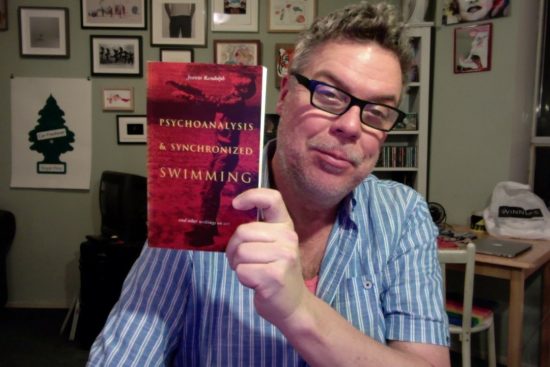
Gallerist Paul Petro refers to my new association with Jeanne Randolph as a “forced mentorship.” He might be right. I’m not sure myself what this new relationship is. Given that Jeanne Randolph has been on my mind so much (I just mailed her a Christmas card) I started to think that I need to do a hard think and ask myself ‘what is it?’ Finally, a decent thought came into my head:

Performance as Lecture
Lecture as Performance

Not a new idea but I think my association to Jeanne / with Jeanne is a desire to move into 

Performance as Lecture
Lecture as Performance

I have tried. In 2015 The Belljar Café in Toronto gave me the opportunity to present a campy, one-off lecture / performance using the 1985 film “Desperately Seeking Susan” as a reference point. I decide to take it all very seriously. My Performance Lecture was entitled “States of Confusion, Amnesia and Loss of Control.” It went “okay”. Not great. Not bad. Certainly something worth re visiting one day. But I haven’t tried or been inspired to try another Performance Lecture

Lecture Performance since.

Moving into 2020 and 2021 I have been slightly re inspired to try my skills again—using Jeanne Randolph and her Performance Lecture style as a reference. In March 2021 I received a $4,000 grant from The Ontario Arts Council to reach out to Jeanne Randolph and use her as a catalyst for  my possible upcoming Performance work, ideas and inspiration. Ideas were tossed around with friends and the concept of a High Tea was decided upon.

On Sunday September 26th, 2021 from 11:30am–1:30pm at The Windsor Arms Hotel in Toronto, twenty-six artists gathered in The Purple Tea Room for a High Tea. Jeanne Randolph was the catalyst for this memorable event. For those who know me well—tea and sweets are not my thing. I probably had one or two sips of the stuff and foolishly ate too many sweets not fully remembering that I do not like cakes and things like that.

Looking back, was The High Tea a performance (maybe). Was I super pleased—yes. Would I organize another one? Probably not—one was enough. 

But rethinking The High Tea: was it a Performance? We as artists gathered not in a bar, not in a gallery, not in a performance space but we gathered in a formal room designated for and famous for a High Tea.

What have I been doing since The High Tea? 

Investigating psychoanalysis (and treading very lightly into the unknown). I find that once I sensitize myself to something (in this case psychoanalysis) it seems to be everywhere. People are talking about psychoanalysis, going back to school to become a psychoanalyst, seeing a psychoanalyst and on it goes….

The High Tea for me was thrilling. Thrilling? For me to be able to treat 26 people to something different, special and certainly not every day is thrilling.

Back to the Shannon Cochrane quote from above:

I haven’t thrown any of this experience out and it is very true that I have no idea where any of this investigation (High Tea, Jeanne Randolph, Psychoanalysis) will take me but hopefully I will move the idea of Performance as Lecture

Lecture as Performance

forward.

Again, not a new idea but an idea worth pursuing in my own way.

December 5, 2021

Artist
Marilyn Arsem

USA

http://marilynarsem.net/

Marilyn Arsem has been creating live events since 1975, ranging from solo performances to large scale, site-specific works incorporating installation and performance. Arsem has presented work at festivals, alternative spaces, galleries, museums and universities in North and South America, Europe, the Middle East, and Asian. In 2016 she completed a 100-day performance at the Museum of Fine Arts, Boston.

Many of her works are durational in nature, and minimal in actions and materials. Created in response to the site, they engage with the immediate landscape and materiality of the location, its history, use, or politics. Arsem has often focused on designing site-specific events for audiences of a single person, allowing her to explore the unique properties of live performance: the possibility of direct interaction between performer and audience; the opportunity to engage the audience’s full range of senses including taste, touch and smell; and addressing the implications of the temporal nature of the live event, which can be retained only in memory. The performances often hover at the edge of visibility, creating an experience in which the viewer must stretch her or his perceptual capacities to their furthest limits.

She has been the recipient of numerous grants, including a Research Fellowship at the American Antiquarian Society, 1997; a National Endowment for the Arts Solo Theater Fellowship, 1994; an Artists’ Projects: New Forms Initiative Award, 1992, from the New England Foundation for the Arts in partnership with the National Endowment for the Arts, the Rockefeller Foundation and the Andy Warhol Foundation for the Visual Arts; and a Massachusetts Artists Foundation Fellowship in New Genres, 1991.

Her work has been reviewed in many publications including The New York Times (Dunning, 1994), Parachute (Todd, 1998), Text and Performance Quarterly (Anderson, 1994), Women and Performance Journal (Todd, 1996; Parker, 1988), P-Form (Askanas, 1998, 1994), New Art Examiner (Abell, 1992), and High Performance (Engstrom, 1991; Sparks, 1990; Miller, 1990; Perez, 1986; Pederson, 1986; Sommer, 1985).

She is a member (and the founder) of Mobius, Inc., a Boston-based collaborative of interdisciplinary artists. She taught at the School of the Museum of Fine Arts, Boston for 27 years, establishing one of the most extensive programs internationally in visually-based performance art.

Artist
Emily DiCarlo

Canada

www.emilydicarlo.com

Emily DiCarlo is an artist and writer whose interdisciplinary work applies methodologies that often produce collaborative, site-specific projects. Evidenced through video, performance and installation, her research connects the infrastructure of time with the intimacy of duration. Since 2007, her work has been shown both locally and abroad with most recent exhibitions at the Art Museum in Toronto and SÍM Gallery in Reykjavik, Iceland as part of their artist-in-residence program. She is the recipient of the 2020–2022 OAC Media Artist Creation Project grant, the 401 Richmond Career Launcher Prize, and recently held the 2019-2020 Canadian Social Sciences and Humanities Research grant (SSHRC). She has been a council member for The International Society for the Study of Time since 2016 and this past year, co-edited an issue of their academic journal KronoScope, which focused on “Anthropocenic Temporalities.” She currently lives and works in Toronto (Tkaronto), Canada.

Artist
Golboo Amani

Canada

http://golbooamani.com/

Golboo Amani is a Toronto-based interdisciplinary artist, who creates works focused on process and research through a variety of mediums including photography, performance, space intervention, digital media, and participatory practice. She received her BFA at the Emily Carr Institute of Art and Design. Concerned with the configurations of power imbedded within institutional structures of knowledge production, Golboo’s practice centers on pedagogical practices and artist-run counter culture. Through cross-disciplinary collaborative projects, the artist’s recent bodies of work involve facilitating inclusive spaces of agency, organizing sites for generous skill sharing and embodied acts of reclamation.

Performance
Ethel: Bloodline by Louise Liliefeldt

Lorem ipsum dolor sit amet, consectetur adipiscing elit, sed do eiusmod tempor incididunt ut labore et dolore magna aliqua. Ut enim ad minim veniam, quis nostrud exercitation ullamco laboris nisi ut aliquip ex ea commodo consequat. Duis aute irure dolor in reprehenderit in voluptate velit esse cillum dolore eu fugiat nulla pariatur. Excepteur sint occaecat cupidatat non proident, sunt in culpa qui officia deserunt mollit anim id est laborum.

Series
Performance Resolution(s)

Resolution:
a firm decision to do or not to do something.
the quality of being determined or resolute.
the action of solving a problem.
the process of reducing or separately something into its components.
the smallest interval measurable by an optical instrument.
the conversion of something abstract into another form.

PARTICIPATING ARTISTS
Cindy Baker
David Bateman
Kate Barry
lo bil
Kiera Boult
Alexis Bulman
Ulyssess Castellanos
Chipo Chipaziwa
Keith Cole & Jeanne Randolph
W. A. Davison
Emily DiCarlo
Claudia Edwards
Vanessa Dion Fletcher
Serge Olivier Fokoua
Marie-Claude Grendon
Moynan King
Hélène Lefebvre
Tess Martens & Holly Timpener
Roy Mitchell
Laura Paolini
Diana Lopez Soto
Jordyn Stewart
Clayton Windatt

Performance Resolution(s) is FADO’s 2021/2022 at-home residency series. Participating artists were chosen from a Canada-wide open call for submissions inviting artists to propose performance-based research projects that engaged with the theme of ‘resolution.’


It goes without saying that 2020 changed everything. The world is now a very different place than before. (We resolve never to say, “it goes without saying” again.) For artists working in live art and performance, events were cancelled and festivals postponed. What happens to embodied practice when the bodies can’t be together irl? With dizzying speed, we were compelled to bring performance to the tiny back-lit screen as an alternative. Sometimes that worked. Without being able to gather in large groups, sometimes we leaned on old tricks (what performance artist doesn’t know what it’s like to perform in a half-empty theatre?) to shoehorn our work into the current context. More often than not, to keep moving, we stuck with the script—over producing and addicted to presentation.


But thankfully the new year brings with it fresh starts, new directions and an opportunity to reflect. We make promises in the form of new year’s resolutions—a private or public personal commitment to change. Most resolutions dissolve by the end of March, or sooner. If 2020 taught us anything, it taught us that transformation comes slowly. The real breakthroughs are still in the (social) distance, but a seed has been planted.

Our inspirations for Performance Resolution(s) are the hope for a better 2021 for all, and a profound performance exercise designed by Marilyn Arsem that we think about from time to time. Read Marilyn’s exercise below.

Some of the projects in this at-home residency series will have tangible outcomes; many will not. The point was not to find to way to support artists through replicating old ways of doing things by keeping the hamster wheel of production going. Instead, we encourage a slowing down and a deep dive into what it means to have resolve, even if you don’t have the answer. 

Watch this space for updates on various projects and research contributions as they reveal themselves over the 2021–2022 programming year.

Performance
OPEN FIRE | FEU OUVERT by Marie-Claude Grendon

Well, our age is one of those fires whose unbearable burning will undoubtedly reduce many works to ashes! But for those that remain, their metal will be intact […] One can no doubt wish, and I wish it too, for a softer flame, a respite, a stopover conducive to daydreaming.
~The Artist and His Time (lecture), Albert Camus, 1957.

With the participation of fire-keepers:
Alexis Bellavance
Laurence Beaudoin-Morin
Catherine Bodmer
Caroline Boileau
janick burn
Sylvie Cotton
Anne Florentiny
Pierre Gauvin
Léo Gaudreault
Stéphane Gilot
stvn Girard
Katherine-Josée Gervais
k.g. Guttman
Michelle Lacombe
Frédérique Laliberté
arkadi lavoie lachapelle
Julie-Isabelle Laurin
Helena Martin Franco
Diyar Mayil
Rhonda Meier
François Morelli
Florencia Sosa Rey
François Rioux
Jacqueline Van De Geer
Stephanie Nuckle

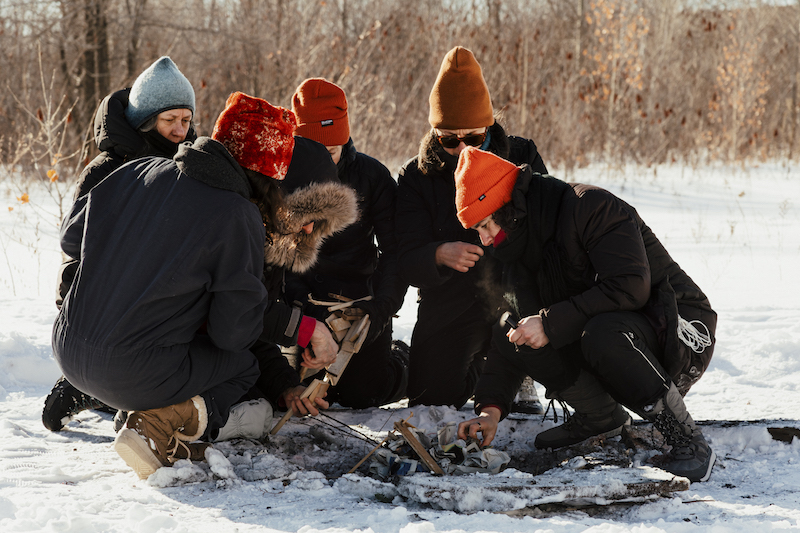
OPEN FIRE | FEU OUVERT is a furtive, political, symbolic and poetic work conceptualized by Marie-Claude Gendron. Involving the artist and many members of the Montréal action art community, the group will feed a fire—daily, stealthily and anonymously—keeping the fire burning continuously over the course of the last two weeks of January.

Up to 40 members of the community of fire keepers will be culled on invitation by the artist. Those who choose to participate in the project will receive a detailed map of the route to find the exact location of the fire. 

OPEN FIRE | FEU OUVERT is an attempt to revive the invisible link that unites us through the practice of action art. Confined, for the most part, to the home, Marie-Claude Gendron’s wish is to propose an outside simple manoeuvre that involves the participation of artists in whatever way is possible given their respective means and motivation. The resolution is to foster being together, even in an abstract and active way in the imagination.

The closing event for OPEN FIRE | FEU OUVERT is a co-presentation with VIVA! Art Action.

Artist
Marie-Claude Gendron

Photo by Karine Locatelli, 2018

Canada
www.marieclaudegendron.com

Through a multidisciplinary approach in action art, visual arts and media arts, Marie-Claude Gendron attempts to identify the patterns of a community that is constantly actualizing itself in the public, private and intimate spheres. She considers the potential of the archive and of ruin through action and spatial settings that she sometimes presents as “tableaux vivants.” In the order of raw commemoration, her projects highlight the inevitable transformation of the existing. She is interested in the multiple possibilities of the book-object and the different forms of poetry in action.

Born in Québec City, Marie-Claude Gendron is involved in the organization of self-managed performative events and participates in several residencies, exhibitions and events in Quebec, France, Brazil, Italy, Northern Ireland, Thailand, Mexico and Switzerland. His work has been the subject of solo and collective presentations at the Galerie de l’UQAM (Montréal, CAN), the Bangkok Art & Culture Centre (Bangkok,TH), the Museo de medicinal laboral (Real del Monte, MX), the Galerie des arts visuels (Québec City, CAN) and as part of RIAP 2012 and 2014 (international performance art meetings, Le Lieu, Québec City, CAN). She has won various prizes and creation grants, including the original initiative grant for the independent broadcast of Première Ovation in 2012 and 2013, the FARE grant in 2014, support from SODEC in 2016 and travel and creation grants from CALQ in 2014, 2015, 2016 and 2019. Marie-Claude Gendron holds a Bachelor’s degree in Visual and Media Arts from Université Laval and a Master’s degree in Visual and Media Arts from Université du Québec à Montréal.

Artist
Louise Liliefeldt

Louise Liliefeldt. Land of the Living. 2022. Photo by Henry Chan.

South Africa / Canada
www.louiseliliefeldt.com

Born in Cape Town, South Africa, Louise Liliefeldt is a Toronto-based performance artist and painter. Liliefeldt’s work has been presented across Canada in a wide array of festivals, platforms and venues including 7a*11d International Festival of Performance Art (Toronto), Art Gallery of Ontario (Toronto), Art Gallery of York University (Toronto), FADO Performance Art Centre (Toronto), Images Festival (Toronto), LIVE Biennale (Vancouver), Mayworks Festival of Working People and the Arts (Toronto), Mercer Union (Toronto), Rencontre Internationale Performance D’art (Québec City), and Western Front (Vancouver) among many others. Her work has been presented internationally in the Netherlands, Poland, Turkey, USA, and Wales. She is a co-foundering member of Toronto Performance Art Collective (TPAC), which produces the 7a*11d International Festival of Performance Art.

In 2016, Liliefeldt was commissioned to create a new performance in the context of the exhibition, Toronto: Tributes + Tributaries 1971–1989 at the Art Gallery of Ontario and curated by Wanda Nanibush. Liliefeldt’s performance, entitled What Does It Mean To Forget? was the first in a series of works that focused on the more fragile aspects of the human experience: aging, dementia and death. Her work is predominately concerned with the politics of identity as it intersects with gender, race and class; and seeks to examine the cultural conventions of spectatorship and the links between emotional and psychological states, and physical experience. The methodology of her performance art practice is shaped by the notion of always taking into consideration the significance of changes in circumstances.

Artist
Keith Cole

Canada

Keith Cole is a Toronto-based artist, performer and writer. He holds a BFA from York University (1989) and an MFA from the Ontario College of Art and Design (2012). His interdisciplinary artistic practice is a collision of the forms of theatre, dance, film and performance, and the intersections they create. Cole has appeared in films, television and performance events worldwide and is a recipient of a Harold Award (1999) a National Tap Dance Award (2004), the Roberto Ariganello Award (2007) a Dora Award Nomination for Outstanding Male Performance in a Musical (2008) a Pink Triangle Award (2000), XTRA! Magazine Mouthiest Queer Activist Award (2010). In 2010 Keith Cole was a leading contender in Toronto’s Mayoral Election. He placed 8th in the overall election putting him in the top 10 of well over 80 candidates. He has written for FUSE Magazine, KAPSULA Magazine, The Dance Current, XTRA! dailyxtra.com, Fab Magazine, The BUZZ and has contributed writing to three academic anthologies. In 2014 and 2015 NOW Magazine readers voted him Toronto’s Best Performance Artist. As an independent scholar his research work explores gossip, hearsay, rumours, theft, speculation and appropriation within the contemporary art world. 

Workshop with Liina Kuittinen

Blowing because mouth knows how to blow and makes a sound for ears to hear
WORKSHOP with Liina Kuittinen
September 21, 2019 @ 11:00am–1:00 pm
TMAC (Toronto Media Arts Centre), 36 Lisgar Street, Toronto

This workshop is, in itself, an experiment in process sharing, modest but direct. During the 2-hours of the workshop, Liina will expose the process of creation behind her most recent performance work, referencing her work presented in Toronto (see below) as the starting point for a series of practical experiments that Liina and the workshop participants will elaborate on together.

“I consider my artistic practice as minor scale resistance to the dominance of language. For example, it is difficult to say anything new about blowing, without blowing; whereas every blow is different from the previous. My performance practice evolves from the physicality of being and action. The body and its habits are my main material.”

DETAILS of the workshop:
This workshop is offered free of charge.
The space that the workshop is offered in accessible.
The maximum number of participants is 15.
The workshop will be offered in English.
You will be asked to participate in various exercises which may involve movement and voice.
It is not necessary to have previous experience in performance-making to take part; however it is highly recommended that participants attend Liina’s performance on September 20th as a precursor to the workshop (see below).

International Visiting Artists: performances by Liina Kuittinen (Finland), Marita Bullman (Germany), Ignacio Pérez Pérez (Venezuela/Finland)
September 20, 2019 @ 8:00pm
TMAC (Toronto Media Arts Centre), 36 Lisgar Street, Toronto
Presented in collaboration with VIVA! Art Action (Montréal)

Writing
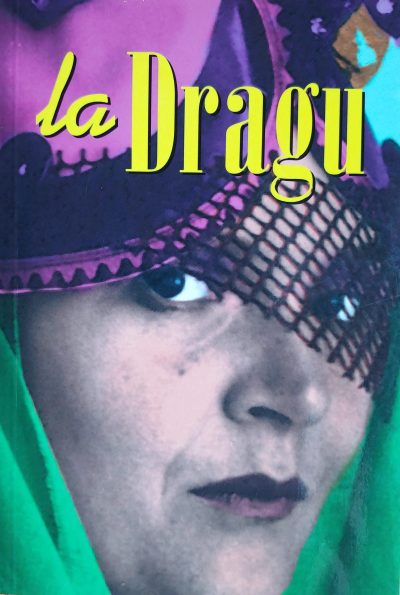
La Dragu: The Living Art of Margaret Dragu 

La Dragu: The Living Art of Margaret Dragu (2002)
Edited by Paul Couillard

Book Design: Randy Gledhill
96 pp. text, 16 pp. photos and DVD insert, 5.5 x 8 inches
Price: $22.50 (plus shipping)

DVD includes the videos Cleaning and Loving It © 2000 and More Cleaning and Loving (It) © 2001, directed by Margaret Dragu and Paul Couillard.

Articles by Glenn Alteen, Paul Couillard, Andy Fabo, Debbie O’Rourke, Sarah Sheard; chronology by Brice Canyon and story and collages by Margaret Dragu.

Margaret Dragu is a 2012 recipient of a Governor General’s Award in Visual and Media Arts. Margaret Dragu is a warm-hearted, fearless and indomitable spirit who has left her mark across disciplines and across the country. Dragu’s astonishing output of work spans back to 1969 and includes forays into theatre, film, video, writing, choreography and above all, performance art. She is perhaps best known for her work in the 1980s, including her long-running X’s and O’s series, which began with a solstice mega-spectacle in Hamilton in 1983 (X’s and O’s on the Longest Day of the Year) and continues with her recent, Improvisation for X’s and O’s. Her 1988 film project I VANT TO BE ALONE reads as a who’s who of the Toronto art scene of the 1980s, while her smaller, more intimate 1990s work has been produced and seen mainly on the west coast. 

To order a copy of this publication, please contact us at info@performanceart.ca

Performance
.site.specific. | curated by Francisco-Fernando Granados

Emerging Artists Series 2013

Curated by Francisco-Fernando Granados

Participating artists: Basil AlZeri, Golboo Amani, Cressida Kocienski, Maryam Taghavi
Co-presented by Xpace Cultural Centre

.sight.specific. proposes performance art as the staging of sight as site: observation as contour, terrain, and architecture for modes of aesthetic embodiment. The project consists of four commissioned live works in search for situated perspectives on the possibilities of performance as a contextual spatial practice. The works situate artists and audience by trading knowledge on the streets, tracing trans-planetary sight-lines, creating home and hospitality in real time through cyberspace, and staging variations on absurdity. The shapes of these relationships brings into focus questions of knowledge and memory, contact and distance, longing and belonging.

Performance
Performance Home: An Archive by Louise Liliefeldt

Performing for the archive; the archive is a performance.

For Louise Liliefeldt’s Performance Home project, over the course of fall/winter 2021, the artist is taking a deep dive through her personal archive of materials, photos and videos documenting her performance practice over the last 20 plus years.

On the surface, the goal is to create a website that illustrates Liliefeldt’s practice, providing a chronological history for those familiar with her work and for new audiences. Behind the surface however is the endless work of sifting, sorting, accessing and editing that the archive needs from us. How does the performance artists make order from what is essentially ephemeral, chaotic and non-linear?

The website design is by Kathleen Smith of 7Pirouettes. This project is partially funded by the Ontario Arts Council. Details of the launch of Liliefeldt’s website coming in summer 2022.

Writing
Remembering Tari Ito

Tari Ito

1951–September 22, 2021

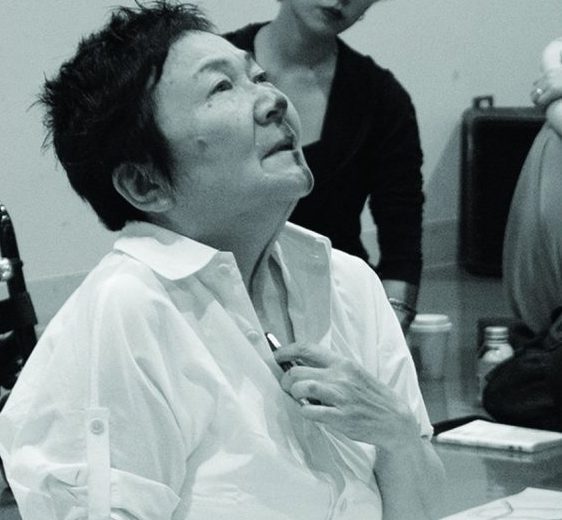
Tari Ito was a Japanese performance artist, organizer, and activist whose work was featured in events across Asia, Europe and North America. She died earlier this year after a ten-year struggle with ALS—an enormous challenge for an artist whose practice was so intensely focused on body movement. She was greatly loved and respected, and many of us mourn her passing. 

I first met Tari in 1990, when she took part in a nine-city Canadian tour of Japanese performance artists, coordinated by Vancouver’s Western Front. She and fellow artist Haruo Higuma spent a week in Toronto, presenting solo works at A Space and also participating in an open “jam” session with local artists. As I recall, it was Pam Patterson and I, working as members of A Space’s performance art committee, who coordinated Tari’s and Haruo’s Toronto appearances. 

For that project, Tari was performing a work she called Memory of the Epidermis, which involved painting large panels of latex “skin” onto the gallery’s floor in advance of her performance. For the Toronto version, she had to improvise using skin she had already created when she could not find the right kind of rubber latex locally. One of her skin objects was a giant balloon-like rubber sphere, as large as her body, which she ended up pushing, bouncing and rolling around the gallery space before finally corralling it in a corner, all the while speaking to it in Japanese—later she told me her words were something to the effect of “What is this giant blister?” 

The work was visual, aural, and above all kinetic, expressing complex relationships and feelings primarily through movement. The rhythm and texture of the performance was varied, ranging from slow, careful gestures to repetitive, staccato motions, always seemingly in reaction to the elasticity of the latex, which could appear either durable or fragile depending on how it was handled. It did not matter that most of us could not understand what Tari was saying in Japanese as she worked with giant sphere: her tone and intonation, and above all her physical interaction with the wobbly figure, were deeply expressive. This visual and gestural communication was also evident in the performance jam, where several of us worked simultaneously without speaking, sometimes side-by-side, sometimes infiltrating or adding to each other’s actions and visuals, creating a striking series of images that I still remember, some of them as accomplished and polished as a finished performance work. It was a charmed encounter. 

The next time I saw Tari was a year later, when she invited me to Japan to take part in the Tajima Performance Festival, co-organized by Yoshimichi Takei and Kyo Hoshino through the auspices of a private group called Scorpio Project. This was the second (and final) iteration of the festival, which took place at the site of the abandoned Yaso copper mine in Japan’s Fukushima district. Billed as a performance art “camp,” the festival was a unique event that brought together performance artists, noise artists, video artists, and Butoh dancers for a week in the countryside, all of us bunking together on the floors of an old wooden schoolhouse. A group of volunteers prepared three meals a day for the participants, who numbered well over a hundred, and performances were self-scheduled using a large blackboard. Each day, artists who wished to perform would write down the time and place (e.g., the quarry, the dam, the schoolhouse grounds, the school gymnasium) of their project, and all of those not caught up in their own preparations or performances would form an audience. Events began each day right after breakfast and continued late into the evening. 

One of the events that Tari organized during the Tajima event was a discussion featuring Clive Robertson, who was then the National Spokesperson for the now-defunct ANNPAC/RACA (Association of National Non-Profit Artist-run Centres/Regroupement D’artistes des Centres Alternatifs). Tari had been deeply impressed by the Canadian artist-run network she discovered on her Canadian tour, and she was hoping that hearing about Canada’s artist network might inspire her Japanese colleagues to band together to create something similar in Japan. Much to Tari’s disappointment, the reception to this discussion was somewhat tepid. Rather than embracing the Canadian example as a possible model for artist-driven organizing, the response of those attending seemed to be that Japan should develop its own ways of organizing rather than looking elsewhere for inspiration. This did not deter Tari’s vision of a supportive artist network, however. Over the years she contributed to a number of feminist art groups, first as part of a collective called afa (Asian Feminist Art), and later founding WAN, the Women’s Art Network, followed by PA/F Space (Performance/Feminist Space). 

Despite her soft-spoken demeanour, Tari had a strident spirit of generosity. Not only did she introduce me to many local artists and even help me find other performance opportunities during my three-month stay in Japan; she also invited all of the Canadian artists who were at the Tajima festival to visit her home in Tokyo, where she lived with her parents. This kind of intimacy was unusual in Japan, where the usual protocol was to meet foreigners at a restaurant. The day of the dinner, there was a torrential downpour, and I arrived at her house completely soaked. She was insistent on putting me in her father’s pyjamas (the only clothes in the house loose enough to fit me) while she washed and dried my clothes. I was embarrassed, but grateful for her kindness. 

If Tari’s connection to Canada proved inspirational for her, it is also important to acknowledge that her presence also played a catalytic role in the development of Toronto’s performance art infrastructure. Tari returned to Toronto in 1993 when she was invited to participate in the Mayworks Festival of Working People by then-director Pat Jeffries, whom Tari had met on her earlier Canadian tour. After Mayworks, Tari stayed in Toronto to explore a romantic relationship with Pat, and she also developed friendships with a number of local artists. When it became apparent that Tari would be in Toronto for an extended period of time, Sandy McFadden, who knew Tari from her time living and working in Japan, suggested to me that we should organize an event for Tari. Here was an internationally known Japanese artist, living in our midst, and Toronto should have more of a chance to discover her work. 

This became the impetus for starting FADO. Sandy, Pam, Ed Johnson, Bernice Kaye and I met in my bedroom one summer day and formed an ad hoc collective to plan our first event, a presentation of Tari’s work. Through my involvement with A Space, which had set aside funds that it would hand out to groups organizing art events as part of its community outreach efforts, I was able to secure enough money to pay for the production costs and a modest artist fee for Tari. Tari wanted to do her performance in a large warehouse space at 1400 Dupont Street, which she had become familiar with from visiting the studio of visual artist Aiko Suzuki. Aiko facilitated a meeting with the building manager, and we were able to convince him to allow us to use the large, unfinished central hall—a huge space, 20 by 50 metres—for Tari’s performance. 

At the time, we had no idea of the trajectory FADO would take, how it would eventually transform into a funded artist-run centre for performance art, or how another FADO event initiated by Sandy, an international performance art festival at CinceCycle in 1996 co-sponsored by Le Lieu in Quebec, would inspire the development of the 7a*11d International Festival of Performance Art. Still, this first project, taking advantage of Tari’s presence in Toronto, already laid the groundwork for what would become FADO’s signature production strategy: an ambitious, site-specific event, cobbled together on a shoestring as an act of faith and community-building. Had it not been for Tari, there likely never would have been a FADO. I am profoundly grateful for the auspicious beginning she provided. 

For her Dupont Street performance, Tari created a new work in her Memory of the Epidermis series, called FACE. One section of the performance featured a row of latex smocks hanging from the ceiling at intervals across the length of the space. Tari followed this line, stepping up to each one and draping it onto her torso until she was covered in a thick layering of skins. Another section featured a very large hanging sheet of latex, 4 by 10 metres, that she punctured and penetrated with her arms. Part of the genesis of these images, she told me, was an unlikely Toronto sight that had captured her imagination. She was intrigued by the telephone poles she saw on the street, covered with staples from guerrilla postering. She found these textured layerings fascinating and beautiful, and was struck by the way they gave evidence of a history of piercing, covering, and removal. For her, they were evocative of the rubber skins she created in her work, which carried with them the inverse outlines of the surfaces they had been painted onto. A video recording of both the preparatory process of creating the skins and parts of the live performance uploaded to YouTube is linked to Tari’s artist page on the FADO website. 

Soon after the FACE performance, Tari returned to Japan when her relationship with Pat ended. I wondered what it would be like for Tari returning to Japan, where being a lesbian—or even identifying as a feminist—could be an isolating experience. Tari’s response was to become much more overtly political and activist. In 1996, she “came out” publicly in a performance work called Self-portrait, which was eventually presented in 26 different venues, including Toronto, where she was part of the Rencontre festival organized by Sandy McFadden for FADO at CineCyle. For Tari, this work signalled a profound shift in her understanding of her art practice, which she realized could be used to convey powerful personal and social messages. Alongside her performances and visual art projects, Tari also began to actively develop and promote feminist and lesbian events, networks, and spaces that spanned beyond Japan’s borders to other Asian countries including Korea and Thailand. 

The last direct involvement I had with Tari’s work was in 2002, when Rochelle Holt curated an exhibition of her work at A Space. The opening night performance, Where is the Fear?, was co-sponsored by the 7a*11d International Festival of Performance Art. Where is the Fear? was an openly lesbian performance with elements of audience participation that Tari developed in part as a response to homophobic remarks by then Tokyo Governor Ishihara Shintaro. Tari presented this work in various Japanese venues as well as Toronto, noting in her book Move, “Sexual minorities live in fear of prejudice. Fear lies in the hearts of people who feel frightened of the idea that there are many different kinds of people in the world” (p. 109). 

Tari made several other visits to Canada over the course of her career, including an appearance at Montreal’s Viva! Art Action Festival in 2006 where she presented Rubber Tit. That performance featured a 2.5 metre-tall inflated rubber tit, which I like to think of as the logical progression of Tari’s “blister” from her early A Space performance. One of her final performances—after a four-year break from performing—was at the LIVE Biennale in Vancouver in October 2019, where she presented Before the 37 Trillion Pieces Get to Sleep, a work that Tari developed in response to the Fukushima nuclear disaster. For this work, curated by Makiko Hara for LIVE, Tari appeared in a wheelchair, and was then laid on large pieces of paper while assistants repeatedly traced the outline of her figure. Tari said of this performance, “The body losing its muscles nonetheless continues to live on. For this reason, I want to stay close to the memories of ‘my body and others’ that were forced into silence or forced to be silent.” A moving description of the performance by Katherine Chan, along with photo documentation by Alisha Weng, can be found on LIVE’s website

I had hoped to bring Tari to Toronto as part of the same tour, to present her work in the context of the KinesTHESES series. Tari wanted very much to return to Toronto, but her deteriorating health made including an additional venue impossible. I suggested that we could perhaps find a way for her to develop the performance remotely, using local bodies to stand in for hers, but such an approach did not fit her vision of the project. She understood her own disabled body to be a key element of the work. She told me that if her body had not been so profoundly compromised, working remotely might have offered an interesting challenge, but precisely because, as she wrote in her hesitant but poetic English, “I stare at the body that is stuck,” she felt it was essential for her to work with her own body, doing only what her own skin, bones, and muscles could accomplish in direct relationship with an audience. The closest the project could get to Toronto was when Pam Patterson’s WIA Projects featured a video installation of the work at Gallery 1313’s Window Box Gallery in early 2020, just as the world was beginning to grapple with the coronavirus pandemic. 

I was sad not to have had an opportunity to work with Tari again, but I rejoice in her ongoing legacy—her performances, which moved audiences on several continents; her organizing and networking efforts, which brought together many artists over several decades; her championing of women’s and minority voices; and, of course, her surprising role in Toronto’s performance art development. And so, I would like to share with you Tari’s humble words from Move’s “afterword,” which seem to me very reflective of her spirit: 

“I believe that the joy of performance art comes from wondering what makes a particular artist engage in a certain action with all of their heart and soul. For this reason, it is actually when I am sitting within the audience of a performance art piece—rather than onstage—that I am the happiest” (p. 185). 

Surely, she shared this happiness with others through her own life and career. 

Paul Couillard, October 2021 
Artist
Tari Ito

b. 1951–September 21, 2021
https://ipamia.net/tari-ito/

Tari Ito is a performance artist based in Tokyo whose work has been presented throughout Europe, Asia and North America. Her training includes a degree in visual art from Wako University in Tokyo, body movement training with Michizo Noguchi, mime with Takao Namiki and Butoh dance with Kazuo Ohno. She also spent four years in Holland performing with the Hat Klein Theatre, Stichting Schwibetous Theatre and Dans Lab. In Japan she was responsible for organizing the Tajima Performance Festival. She appeared at A Space Gallery (Toronto, Canada) in 1991 as part of a cross Canada tour. 

Performance
The Confessional by Clive Robertson

Lorem ipsum dolor sit amet, consectetur adipiscing elit, sed do eiusmod tempor incididunt ut labore et dolore magna aliqua. Ut enim ad minim veniam, quis nostrud exercitation ullamco laboris nisi ut aliquip ex ea commodo consequat. Duis aute irure dolor in reprehenderit in voluptate velit esse cillum dolore eu fugiat nulla pariatur. Excepteur sint occaecat cupidatat non proident, sunt in culpa qui officia deserunt mollit anim id est laborum.

Performance
Trace Elements by Paul Couillard

Lorem ipsum dolor sit amet, consectetur adipiscing elit, sed do eiusmod tempor incididunt ut labore et dolore magna aliqua. Ut enim ad minim veniam, quis nostrud exercitation ullamco laboris nisi ut aliquip ex ea commodo consequat. Duis aute irure dolor in reprehenderit in voluptate velit esse cillum dolore eu fugiat nulla pariatur. Excepteur sint occaecat cupidatat non proident, sunt in culpa qui officia deserunt mollit anim id est laborum.

Performance Yellow

This fragrance opens us to the question, has the show started? Its winter, the theatre is colder than the street and the room is filled with people and all their winter smells: wet faux leather, down, too much shampoo, and beer breath. The atmosphere is a trickster. Am I late, am I early?

Top Notes

yellow mandarin, mimosa

Middle Notes

honey, chamomile, salt

Base Notes

narcissus, guaiac wood, piss, beer


Deprecated: trim(): Passing null to parameter #1 ($string) of type string is deprecated in /home1/birdskil/public_html/fadodev/wp-content/plugins/simple-lightbox/includes/class.utilities.php on line 545